Tuesday, June 30, 2015

Some of June's Reading


Paper Towns by John Green

   I love me some John Green just as much as the next YA reader, but Paper Towns fell short of my expectations. With the upcoming movie release, and a weekend at my aunt's house where I was able to snag a copy off my cousin's nightstand, it was easy to immerse myself in the first 100 pages. Margo Roth Spiegleman, John Green's version of a literal girl-next-door femme fatale intrigued me with her literariness and wanderlust. I simply couldn't resist the allusions to Whitman and American folk music. But the novel's first-person narrator, Quentin Jacobson, who has been in love with Margo since early childhood, and his search to find Margo felt contrived and a bit pathetic.  The novel's themes of growing up, transcending high school's cliche cliquiness and the characters' sugary nostalgia even BEFORE  leaving for college made me a little sick. However, the novel itself with Green's witty characters and snarky description made for enjoyable prose even when the story itself fell short.
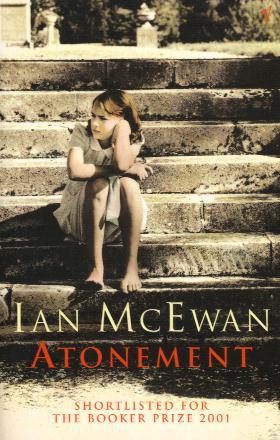


Atonement by Ian McEwan

I was amazed by this novel's structure as it questions the role fiction plays in our lives. 13-year-old Briony Tallis witnesses two unspeakable acts between her older sister Cecilia and the son of one of the family's staff, Robbie. What Briony sees from her bedroom window and later in the library in the summer of 1935 immediately distorts her vision and testimony of the events that transpire over the next 12 hours at the Tallis Mansion. Into the future the characters are unable to escape the consequences of that fateful summer day as the novel jumps ahead to Robbie joining the British retreat near Dunkirk in the Spring of 1940.  This novel contains some of the most graphic and bloody  WWII description I have read yet. Next, we learn Cecilia has become a nurse in London, and we see Briony has become a nurse in training despite her literary aspirations as a child. The sisters have not spoken in years, and still Briony is attempting to find atonement for her childish actions from that summer day in 1935. This novel's structure and themes beg readers to consider how shame and forgiveness shape our lives, and whether who we are most unforgiving to is ourselves, just as McEwan describes, “How guilt refined the methods of self-torture, threading the beads of detail into an eternal loop, a rosary to be fingered for a lifetime.”


Summary of “High School English Language Arts Teachers’ Argumentative Epistemologies for Teaching Writing”


After observing 31 high school ELA classrooms, this case study describes how three different high school English teachers perceive and teach argumentative writing.  The authors of this study go beyond focusing on “best practices “and instead offer a deeper illustration of how and why each teacher approaches argumentative writing the way they do.   Within the three case studies, one teacher approaches the unit from a structural/organization standpoint, another by focusing on ideas and critical thinking, and the last approaches the unit through social practices with attention to students’ consideration for writing for appropriate audience and context. The findings of the study imply that ELA teachers have a wealth of ideas and tools for teaching argumentative writing that should not be ignored and that current motions such as the Common Core and other “efforts to foster teacher learning and development must understand this complex dynamic” (117).


Question/Problem:
1. What argumentative epistemologies are reflected in the instructional units on argumentative writing?
 2. How were teachers’ epistemologies for teaching argumentation made evident in their instructional reasoning and enactment of instructional conversations?”  (100).

Authors: George E. Newell, Jennifer VanDerHeide, and Allison Wynhoff Olsen

Source (Book, Journal..): Research in the Teaching of English, Vol. 49, No. 2, November 2014 pp. 95-119


Theoretical or Study-Based: Qualitative/ analysis of 3 case studies

Study Description:

Number of participants: 31 high school ELA classrooms observed with 3 chosen case studies
Age of Participants: professional educations; case study teachers with 14 years experience, 16 years experiences, and 8 years experience

Length of study: From September 2010 to May 2012 (2 school-years)

Measurement Tool: Data sources of 3 case study teachers included teacher interviews and debriefings, teacher surveys, classroom observations, student writing samples (teacher-selected), student interviews and student surveys (102).

Setting: 3 case study locations: 1) urban, 9th grade college prep with ethnic minority and white student population; 2) suburban, 12th grade Advanced Placement with mostly white student population; 3) suburban, 11th grade college prep with mostly white student population

Research Design: First, the researchers observed 31 ELA classrooms and chose 3 representative of the 3 major epistemologies identified for approaching argumentative writing. Next, the researchers collected the data listed from above and coded “instructional chains” or the main objectives of each teacher’s activities/mini lessons. The researchers met frequently to cross-examine their coding and talk through any discrepancies. Also, the researchers interviewed the teachers and asked the following questions, which they then coded for key words to fit into one of the three epistemologies:
How do you define argumentative writing? What are the key components of argumentative writing?
• How would you describe your approach to teaching argumentative writing?
·      What instructional strategies do you view as critical to teaching argumentative writing?
• What are your general goals for teaching argumentative writing?” (103)

Findings:
1. 18/31 teachers in the study focused on structural epistemology as their main method of teaching argument by emphasizing the concepts ‘claim,’ ‘evidence,’ and ‘warrant.’

2.  Scaffolding and prioritizing the structural components of writing allow students to better organize and understand their own thoughts. The teacher then facilitates this process.

3. Only 3/31 teachers used “argumentative writing as an ideational tool” in which argumentation is “not the destination but the vehicle that allows students to develop original critical thinking and ideas” (109). This method is primarily used with building an argument within a certain discourse or discipline, such as refining the skill of drafting a college-level literary analysis essay.

4. 10/31 teachers used the “social practice epistemology…to consider to whom, how, when, where under what conditions, and what purposes they may be making an argument” (112).

5.  In the social practices epistemology, teachers value reframing the concepts of argumentation to other disciplines or venues beyond school, such as a crime scene investigation, to show students how warrants can help “anticipate the demands of a [specific] audience” (115).

Implications:
1.  This study allows us to see patterns in how ELA teachers teach as well as how they rationalize their choices for methods in teaching and defining argumentative writing. In turn, this provides us a starting point to discuss the instructional focus of argumentation skills, especially “on form versus content in argumentative writing” (116).

2. “Studying teachers’ practical reasoning for specific actions is important as a tool for considering how teachers think about practice and as an intervention to foster changes and new thinking grounded in the contexts of their own practice” (116). This is incredibly important for me to think about as I prepare to guide a pre-service teacher and co-teach with this teacher candidate in my classroom.

3. As more and more curricula is controlled by forces outside of the classroom, I think it’s important to study and document teaching practices and the professional study of teaching practices.  There is a wealth of knowledge, experience, and skill here that cannot be overlooked as we are asked to adapt to less credible standards outside of our control as educators.


Summary of "Speak: The Effect of Literary Instruction on Adolescents’ Rape Myth Acceptance”

   Victor Malo-Juvera asks whether participation in a literary unit based on the young adult novel Speak could lower adolescents’ rape myth acceptance. Speak, by Laurie Halse Anderson, is a young adult novel that details the aftermath of a date rape survived by a girl, Melinda, who is raped the summer before her freshman year. The story is told in Melinda’s point of view and illustrates the impact this assault has had on her emotionally and behaviorally. A rape myth is an idea like “She wanted it,” to account for sexual assault. Among the background data presented by the researchers, many of these myths are accepted by college students, so this rape myth rhetoric is said to begin as early as students’ time in middle school. Using researcher-created questions, along with actual Rape Myth Acceptance Scales, the treatment groups engages in a five-week reader-response study of the novel, while the control group studies Shakespeare.  The students take a pre-test and post-test to measure the level of their rape myth level acceptance to see if studying the novel in an authentic, empathetic way influences students’ attitudes toward rape.

Question/Problem: Do students who participate in the novel unit exhibit lower rape myth acceptance than students who do not?


Source (Book, Journal..): Research in the Teaching of English, Vol. 48 , No. 4, May 2014 pp. 407-427

Theoretical or Study-Based:  Quantitative

Study Description:

Number of participants: Participants were 139 eighth-grade students with 74 boys and 65 girls. Participants ranged in age from 13 to 17 years. 73 were Latino, 48 were African American, 8 were European American, 4 were Caribbean and 2 were Native American. 2 students were other ethnicities (413).

Length of study:  The study took place “the third quarter of the school year and lasted 5 school weeks” (414).The Speak unit lasted 5 weeks and consisted of 12 classes (each lasting 1 hour and 45 minutes) held every other school day” (415).

Measurement Tool: Pretests and posttests measured the students’ rape myth acceptance. In addition to researcher-created question, “This study used two inventories to measure pretest rape myth acceptance: the
Rape Myth Acceptance Scale (RMAS; Burt, 1980) and the Adolescent Rape Myth Scale (ARMS)” (415).

Setting:  A large school district in the southeastern United States at a Title 1 middle school with 8th grade ELA tracks in language arts, advanced language arts, or inclusion language arts. The free/reduced lunch rate for the school where the study was conducted was about 85% (413).


Research Design:  The study took place in two teachers’ classrooms and “used an experimental pretest-posttest design with a wait-list control group. A convenience sample of seven 8th-grade classes was randomly assigned” the treatment group or the control group. “Immediately after posttests, all participants attended a dating violence workshop conducted by the school’s counselor. The workshop was conducted after posttests in order to partition the effect of the literary unit from any attitudinal changes caused by the workshop. During the treatment’s group instruction of the novel unit, the teachers used reader-response activities and small group discussion to foster authentic and empathetic engagement from the students. “Students in the control group (n = 57) participated in a concurrent 5-week instructional
Unit on Shakespeare’s Julius Caesar that used similar instructional methods” (416).

Findings:
1. Analysis of the pretests “found that girls… had significantly lower… pretest rape myth acceptance than boys” (416).

2. “Analysis of covariance (ANCOVA) was significant…the intervention was successful in lowering rape myth acceptance for students in the treatment group versus those in the control group” (417).

3. “The findings suggest that treatment was effective not only in avoiding a backlash, but also in significantly reducing rape
myth acceptance in boys with high pretest rape myth acceptance” (418).

4. “Results reveal that the effect size for She Wanted It was three times larger than the effect size for She Lied, indicating that even though treatment significantly reduced adherence to both constructs of rape myth acceptance, it was more effective in reducing beliefs that rape survivors desire their victimization than it was in dispelling beliefs that girls who report rape fabricate their accusations” (418).

 Implications:
1.  It is possible that a fictional young adult novel gave students a shared experience that they could discuss more freely than they could actual events” and this might not have been the case if the teacher had used more traditional teacher-centered methods for teaching literature rather than the reader-response approach (420).

2. “While the effect of treatment on boys was slightly more prominent, the fact that boys had significantly higher levels of pretest rape myth acceptance provided them with more room to show improvement;” however, it is also likely in our culture that males engage in conversation about this topic less frequently than girls and so this mindful introduction to rape mythology provided the boys with insights beyond their experience (420).

3. “This intervention may have avoided the backlash found in previous studies (Jaffe et al., 1992) due to: (a) the reading, which allowed students to vicariously experience the aftereffects of a date rape through a primarily aesthetic reading transaction; (b) the instruction, which engaged the students in reader response–based dialogic instruction; and/or (c) the duration of this intervention,” and I also think it’s notable to think about the students relationship with their teacher and other students in the classroom. (421). In order to talk about rape in the classroom, there must be a strong culture of respect and compassion, which obviously the teacher and students had cultivated before beginning the unit. I don’t think such growth would have been seen otherwise.

4. This study also enters into an important conversation about English language arts pedagogy. For example, it challenges Common Core architect David Coleman’s infamous statement that “people really don’t give a shit about what you [students]
feel or what you think” (421).


Summary of "Toward a Critical ASD Pedagogy of Insight: Teaching, Researching, and Valuing the Social Literacies of Neurodiverse Students”


Shannon Walters provides the results of a case study of two undergraduate students with self-identified Asperger Syndrome (AS) and explores their experience in a first-year writing course. Walters proposes “a methodology based on the concept of ASD as insight, rooted in disability studies, in which the perspectives of neurodiverse students are prioritized (340). The findings reveal that traditional writing methods, such as engaging in the inventing, drafting, and revising writing process are not effective for all students’ writing success. Also, Walters shares and discusses with the two students how valuing these students social writing outside of the classroom is a more effective technique than imposing traditional or “neurotypical” writing pedagogy.


Question/Problem:
“1. How do students with AS characterize themselves as writers inside and outside of the classroom?
2. How do students with AS describe their experiences in their first-year writing courses?
3. What do AS students’ perceptions, experiences, and reflections show about how or why they are succeeding and/or struggling in first-year writing?” (343).


Research in the Teaching of English, Vol. , No. 4, May 2015 pp. 340-360

Qualitative study/ analysis of 2 case studies

Study Description:

Number of participants: 2 volunteer first-year writing students (college undergraduates) with self-identified Asperger Syndrome. Both volunteers were from “white, middle-class socioeconomic backgrounds and had experience with homeschooling” (345).

Length of study: Walters met with the two volunteers five times over the course of a semester for 60-90-minute-long sessions.

Measurement Tool: Walters collected data from “semi-structured individual interviews with each participant and from participants’ course work and writing” (343).

Setting: The first volunteer took the first-year writing course as an accelerated 6-week summer program that met every day.  The second volunteer took a home-school version in which he was able to take one college class from home per semester in which an instructor worked with him one-on-one to modify the projects and assessments.

Research Design: After transcribing the interviews (spoken and written), Walters coded the data into categories such as “(1) drafting, revising and peer review; (2) writing as a social activity; (3) writing in a community; (4) critical litearcies; (5) creativity; and (6) participants’ self-reported writing strengths and weaknesses” (343).  Then, Walters used critical disability theory to read and systematically analyze the speakers’ insights regarding their experiences writing in the course.  Walters made sure to give voice and agency to the volunteers, instead of her own analysis, to insure the self-advocacy of the volunteers with AS. 

Findings:
1. Both volunteers struggled with the traditional “writing process” pedagogy of Invent, Draft and revise.  The first volunteer spoke of limited time, and the second volunteer spoke of too much time given for revising which wasn’t needed (347).  Students with AS may not experience the same writing stages as most neurotypical writers.

2. Both volunteers struggled with writing about assignment topics that were not of interest to them. This is also true for many neurotypical students but “the degree” to which the students with AS struggled was substantial, especially in comparison with the level of writing they were able to produce when choosing their own topics (349).

3. “Students struggle not necessarily because they have As, but more often experience difficulty because their courses do not support neurodiverse approaches to writing” (349).
4. Both volunteers excelled with writing as a social activity when it was of choice and interest to them, and both volunteers did not participate when forced into a peer-review group in class that was not meaningful or authentic to them (350).

5.  Despite the misconception that students with AS do not value socializing, both volunteers described the value of social interaction on their writing and asked for this expectation to be redefined in terms of how social activity could benefit their writing (353). 

 Implications:
1.  The traditional “Writing Process” cannot be taught as a one-size-fits-all approach. This seems like an obvious implication, but writing teachers need to understand they are teaching writers, and not necessarily just the skills of writing. Each human is different. 

2. Teachers of writing may want to explore more “post-process theories and genre-blended approaches. to invite more participation from neurodiverse students” (356). 

3. Both volunteers with AS shared a use of lists that was quite significant to their writing process. This strategy can be explored as a support for students in their writing (354).